- Home
- Insights
Measuring Communication Success Beyond Media Coverage
- 6 Min Read
- JUN 20, 2026
- Minchu Analytics Team
Understanding What Communication Actually Achieves.
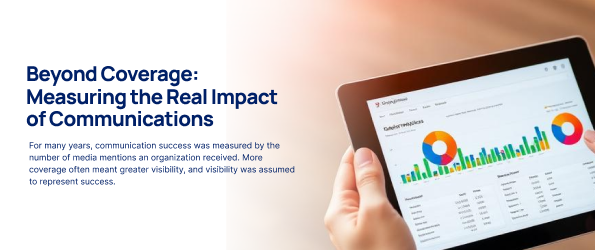
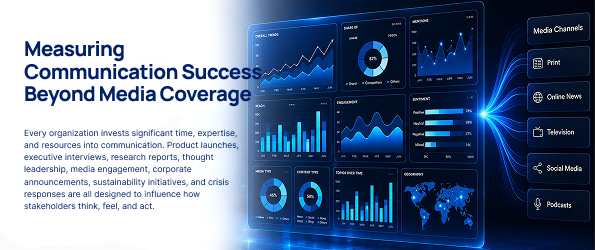
Every organization invests significant time, expertise, and resources into communication. Product launches, executive interviews, research reports, thought leadership, media engagement, corporate announcements, sustainability initiatives, and crisis responses are all designed to influence how stakeholders think, feel, and act.
Yet many organizations continue to evaluate communication success using only one question:
“How much coverage did we receive?”
While media coverage remains an important indicator of visibility, visibility alone rarely reflects business impact.
A front-page article may generate limited influence if it reaches the wrong audience.
Meanwhile, a smaller publication may create significant value by shaping investor confidence, strengthening customer trust, influencing regulators, or positioning executives as industry thought leaders.
At Minchu Analytics, we believe communication should be measured not only by exposure—but by understanding its influence, relevance, credibility, and contribution to business objectives.
Meaningful PR measurement transforms communication activity into strategic business intelligence.
Title Introduction
Visibility Is Only the Beginning
For decades, organizations relied on media clippings, advertising value equivalency (AVE), and simple mention counts to evaluate communication performance.
Those metrics answered one question:
Did people see our message?
Today’s communication environment requires organizations to answer much more important questions.
- Did stakeholders trust the message?
- Did the right audience engage?
- Did communication strengthen reputation?
- Did executive visibility improve?
- Did narratives change?
- Did communication support business outcomes?
Modern organizations require measurement frameworks that connect communication activities with organizational priorities.
Communication should no longer be measured by quantity.
It should be measured by impact.
Why It Matters
Better Measurement Creates Better Communication
Communication leaders increasingly contribute to strategic decision-making.
Executives expect communication teams to demonstrate measurable value—not simply produce activity reports.
Meaningful PR measurement helps organizations:
- Understand communication effectiveness
- Improve stakeholder engagement.
- Measure campaign performance.
- Evaluate message consistency.
- Strengthen executive visibility.
- Protect organizational reputation.
- Demonstrate communication ROI.
- Improve future communication strategies.
Organizations that measure communication intelligently continuously improve how they communicate.
Industry Challenges
Why Traditional PR Metrics Are No Longer Enough
Many communication reports still emphasize metrics that are easy to calculate but difficult to translate into business value.
Common challenges include:
| Measuring Quantity Instead of Quality | High coverage volumes do not necessarily indicate positive outcomes. Coverage quality often matters more than volume. |
| Focusing Only on Reach | Large audiences do not always represent relevant stakeholders. Effective communication reaches decision-makers, customers, investors, regulators, and industry influencers—not simply larger audiences. |
| Lack of Business Context | Communication reports frequently summarize media activity without explaining how communication supports organizational goals. Leadership requires insight—not activity summaries. |
| Fragmented Performance Data | Campaign performance is often measured separately across media, social platforms, events, digital channels, executive communications, and stakeholder engagement. Organizations require one unified view. |
| Difficulty Demonstrating ROI | Communication teams increasingly face pressure to demonstrate measurable contribution to organizational success. Traditional media reports rarely provide this perspective. |
KEY INSIGHTS
1. Communication Should Be Measured Against Business Objectives
Successful communication begins with clear objectives.
Examples include:
- Building trust
- Increasing awareness
- Supporting product launches
- Strengthening investor confidence
- Improving employer branding
- Protecting reputation
- Influencing policy discussions
Measurement should evaluate progress toward these objectives—not simply count media mentions.
2. Quality of Coverage Matters More Than Quantity
Not all media coverage creates equal value.
Organizations should evaluate:
- Publication credibility
- Audience relevance
- Message accuracy
- Executive visibility
- Competitive positioning
- Industry influence
One highly respected financial publication may create greater strategic value than dozens of low-impact mentions.
3. Share of Voice Provides Competitive Perspective
Communication performance should always be viewed relative to competitors.
Share of Voice helps organizations understand:
- Industry visibility
- Market positioning
- Competitive influence
- Emerging market leaders
- Communication opportunities
Benchmarking transforms isolated metrics into strategic insight.
4. Reputation Cannot Be Measured by Headlines Alone
Reputation develops over time through repeated stakeholder interactions.
Meaningful measurement evaluates:
- Sentiment trends
- Narrative evolution
- Stakeholder trust
- Executive credibility
- Brand associations
- Emerging concerns
Understanding reputation trends enables proactive communication.
5. Executive Visibility Influences Organizational Credibility
Leadership communication increasingly shapes organizational perception.
Measurement should evaluate:
- Executive interviews
- Conference participation
- Thought leadership
- Industry recognition
- Expert commentary
- Media influence
Strong executive visibility strengthens trust across customers, investors, employees, and partners.
6. Campaign Success Extends Beyond Media Coverage
A successful communication campaign should answer questions such as
- Did audiences understand the message?
- Did engagement improve?
- Did stakeholder perception change?
- Did the campaign influence conversations?
- Did competitors respond?
- Did communication support business objectives?
- Meaningful PR measurement answers these questions.
Media Intelligence in Practice
Product Launch Campaign
A technology company introduces a cloud platform.
Instead of reporting:
“420 media mentions.”
Meaningful measurement evaluates:
- Message pull-through
- Analyst response
- Customer sentiment
- Executive visibility
- Competitive comparison
- Industry influence
Leadership gains actionable insight rather than activity metrics.
Corporate Reputation Campaign
A financial institution launches a trust-building initiative.
- Improved positive sentiment
- Higher executive visibility
- Increased investor engagement
- Executive visibility
- Competitive comparison
- Greater share of voice
These outcomes demonstrate strategic value beyond media exposure.
Corporate Reputation Campaign
A financial institution launches a trust-building initiative.
- Improved positive sentiment
- Higher executive visibility
- Increased investor engagement
- Stronger industry recognition
- Greater share of voice
These outcomes demonstrate strategic value beyond media exposure.
ESG Communication
A manufacturing organization announces sustainability commitments.
Meaningful evaluation identifies:
- Stakeholder trust
- ESG narrative adoption
- Media quality
- Investor interest
- Regulatory attention
The organization understands not only what was covered—but what influenced perception.
Crisis Recovery
Following an operational disruption, a telecommunications provider evaluates post-crisis communication.
Intelligence reveals:
- Recovery in public sentiment
- Reduced negative media narratives
- Improved customer confidence
- Positive executive communication
This demonstrates communication effectiveness over time.
How Minchu Analytics Helps
Measuring What Truly Matters
At Minchu Analytics, our PR Measurement framework extends beyond traditional reporting.
We combine communication analytics with experienced human interpretation to help organizations understand both performance and business impact.
Our capabilities include:
- PR Measurement & Evaluation
- Campaign Performance Analysis
- Media Quality Assessment
- Reputation Intelligence
- Share of Voice Analysis
- Executive Visibility Tracking
- Stakeholder Sentiment Analysis
- Competitive Benchmarking
- Narrative Analysis
- Executive-Ready Reporting
Every reporting framework is tailored to your communication objectives, stakeholders, and industry priorities.
Key Takeaways
Measuring Communication That Matters
Effective communication measurement is about understanding influence—not simply counting visibility.
Organizations that adopt meaningful measurement are better positioned to:
- Demonstrate communication value
- Improve future campaigns
- Strengthen stakeholder relationships
- Enhance executive credibility
- Benchmark competitors
- Protect organizational reputation
- Support strategic decision-making
Ultimately, organizations that measure communication intelligently communicate more effectively.
Industry Perspectives

The Future of Media Intelligence: Where Human Expertise Meets Technology
Aug 10, 2026 •
6 min read
›

Building Executive-Ready Intelligence Reports
Aug 3, 2026 •
7 min read
›

Human Expertise in an AI-Driven Media Landscape
Jul 23, 2026 •
7 min read
›

Five Reputation Risks Every Organization Should Monitor
Jul 7, 2026 •
5 min read
›

Measuring Communication Success Beyond Media Coverage
Jun 20, 2026 •
6 min read
›
Protect Your Reputation Through Meaningful Intelligence
Every conversation influences perception.
Every perception influences decisions.
Whether you’re monitoring stakeholder trust, strengthening executive credibility, identifying emerging risks, or preparing for future communication challenges, Minchu Analytics helps transform reputation signals into meaningful intelligence that supports confident business decisions.
Measure Communication That Drives Business Outcomes
Communication is no longer judged by how much attention it receives—it is judged by the confidence it builds, the trust it strengthens, and the decisions it supports.
Whether you’re evaluating campaigns, strengthening executive visibility, measuring reputation, or demonstrating communication ROI, Minchu Analytics helps transform communication performance into meaningful intelligence that enables better business decisions.