Protecting Reputation Before Small Issues Become Major Crises.
An organization’s reputation is built over years but can change within moments.
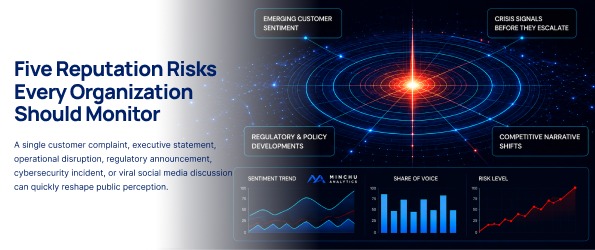
A single customer complaint, executive statement, operational disruption, regulatory announcement, cybersecurity incident, or viral social media discussion can quickly reshape public perception.
Today’s reputation is no longer influenced solely by traditional news coverage. It evolves continuously across digital media, social platforms, industry forums, investor discussions, employee communities, review websites, podcasts, and stakeholder conversations.
The challenge for modern organizations is not simply responding to reputation issues—it is identifying them early enough to act with confidence.
At Minchu Analytics, we help organizations move beyond reactive monitoring by providing meaningful intelligence that identifies emerging reputation risks, explains stakeholder perception, and enables informed communication before issues escalate.
Organizations that understand reputation early are better positioned to protect trust, strengthen stakeholder confidence, and support long-term business success.
Title Introduction
Reputation Is Constantly Evolving
Every organization has a reputation.
The real question is whether leadership understands how that reputation is changing.
Years ago, reputation evolved gradually through newspapers, television coverage, and corporate announcements.p understands how that reputation is changing.
Today, reputation develops every minute through thousands of conversations happening simultaneously across multiple channels.
Employees share experiences.
Journalists publish breaking news.
Industry experts offer opinions.
Influencers shape conversations.
Investors interpret market developments.
Employees share experiences.
Journalists publish breaking news.
Industry experts offer opinions.
Influencers shape conversations.
Investors interpret market developments.
Regulators announce policy updates.
Competitors influence industry narratives.
Most reputation challenges begin quietly.
Regulators announce policy updates.
Competitors influence industry narratives.
Most reputation challenges begin quietly.
Organizations that identify early signals gain valuable time to respond before conversations become headlines.
Why It Matters
Reputation Influences Every Business Decision
Reputation affects far more than public image.
It influences:
Strong reputations create resilience during periods of uncertainty.
Weak reputations amplify operational challenges.
Organizations that continuously monitor reputation are better prepared to communicate with confidence.
Industry Challenges
Why Reputation Has Become More Difficult to Manage
Modern organizations operate within one of the fastest-moving communication environments in history.
Common challenges include:
KEY INSIGHTS
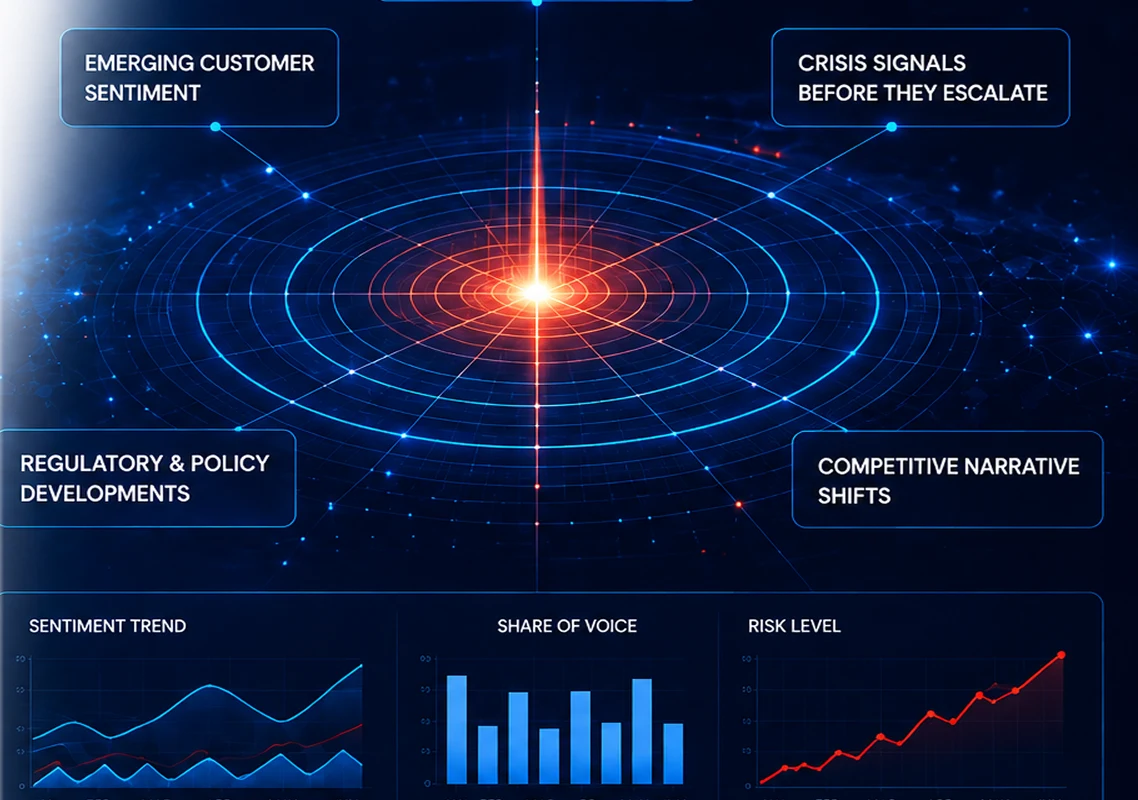
Emerging Customer Sentiment
Customer perception rarely changes overnight.
It develops gradually through:
Early changes in customer sentiment often indicate broader reputation shifts.
Organizations that monitor these conversations can improve communication before dissatisfaction becomes widespread.
Executive Reputation
Leadership visibility directly influences organizational credibility.
Executives increasingly represent their organizations through:
Strong executive communication strengthens trust.
Poor communication can rapidly influence stakeholder confidence.
Media Intelligence evaluates executive visibility alongside broader organizational reputation.
Regulatory & Policy Developments
Many reputation risks originate outside the organization.
Examples include:
Understanding these conversations early enables organizations to prepare proactive communication strategies.
Competitive Narrative Shifts
Competitors continuously influence industry perception.
Organizations should understand:
Competitive reputation intelligence helps organizations identify communication opportunities before competitors dominate industry narratives.
Crisis Signals Before They Escalate
Most crises begin as isolated conversations.
Examples include:
Organizations that identify these signals early gain valuable time to coordinate communication and reduce reputational impact.
Reputation Intelligence in Action
Healthcare Organization
Patient feedback begins highlighting longer waiting times.Media Intelligence detects increasing discussion across review platforms before traditional media coverage emerges.
Leadership introduces proactive communication and operational improvements.
Financial Institution
Growing online discussion questions digital banking reliability.
Rather than waiting for mainstream attention, leadership strengthens customer communication and improves service transparency.
Manufacturing Company
Local community discussions raise environmental concerns around a new facility.
Reputation Intelligence identifies the issue early, enabling stakeholder engagement before broader public attention develops.
Technology Company
Executive interviews begin generating inconsistent messaging around product strategy.
Leadership receives intelligence highlighting narrative differences, improving future communication consistency.
How Minchu Analytics Helps
Intelligence That Protects Reputation
Our Reputation Intelligence framework combines experienced human analysis with technology-enabled methodologies to identify meaningful reputation trends.
Our capabilities include:
Crisis & Issues Intelligence
Stakeholder Sentiment Analysis
Executive-Ready Reporting
Every engagement is tailored to your organization’s communication objectives, stakeholder priorities, and industry landscape.
Key Takeaways
Reputation Is Built Before Headlines Appear
Organizations that protect reputation most effectively identify risks early.
Meaningful intelligence enables leaders to:
The earlier organizations understand changing narratives, the more options they have to respond strategically.